Showing posts with label writing. Show all posts

Saturday, October 18, 2014

Give Great Feedback (Without Going Crazy)!

I honestly don't know how high school English teachers do it. For years, I have struggled to keep up with the writing output of my fourth graders so that I can give them the high quality feedback they need so they can improve. I must say, however, that once again, technology makes this process SO much easier. Today I'm going to share some high-tech (and low-tech) ways to give great writing feedback without having to give up all of your nights and weekends.


Get your class to use Google Docs

I can't say enough good things about using Google Docs with my students this year. We use it for drafting and publishing, and the students share their docs with me the minute they start working on a new piece of writing. A few reasons why I love it: 

1. I can keep tabs on my students. We all have those kids who look like they're working but really aren't. Or those who just struggle to get ideas down. In the past, when I used notebooks, it might take me a couple of days to realize that a student was struggling. Now, I can leave those students' documents open on my laptop and see in real time what's happening in their writing. It makes them and me more effective during our writing block.

2. It's a great source of data. I was working with a student in RtI, and one of the data points I had to collect was how much writing she was able to accomplish during our writing block. Google Docs allow you to go back through a document's revision history so I could see what the writing looked like each day. I could track word counts and changes, and I could even see if she had worked on it at home (where the big changes seemed to happen). All of that information was very helpful and far more than I could have gathered using a notebook.

3. It makes conferring and feedback easier. I can have students ask me questions about their writing, and I can immediately pull it up and see it. I can also track when I've given feedback and which feedback gets used or ignored. It's a great record of my work with students.

Consider a Feedback Add-On

When I went to ISTE this summer, I learned about Kaizena, a tool that integrates with Google Drive and allows you to give feedback in a variety of ways. For example, you can:

  • Give audio feedback -- make comments about the paper by talking to the student about his or her writing. It will record your comments and embed them to the document. This would be SO much faster than typing things out.
  • Re-use comments -- if you find yourself making the same comment over and over again, you can create the comment once, tag it for easy finding, and use it again later. Talk about a time saver!
  • Embed videos -- sometimes students benefit from short movies or examples that teach a particular skill. It's like a personalized mini-lesson.
The problem? As of this writing, the app doesn't work with the iPads. Kaizena creates a link in the first comment and that link directs students to their platform, but links like that aren't clickable through the comments on Google Docs' iPad app. It would be great for a class with 1:1 laptops, but that's not where I'm at. I've heard that an iPad app is in the works, but until then, I'm having to devise my own alternatives. 

Build Your Own Comment Library

Inspired by the concept of Kaizena, I've started to build my own reusable comment library for those comments that apply over and over again. I'm just using a Google Spreadsheet, and I've divided it into the following columns:

1. Tag - a word or phrase to help me find the comment. Examples:
  • Capitalization - Proper Nouns
  • Run-on sentences
  • Then vs. Than
2. Comment - type out the exact text of what you want the comment to say to address a particular skill or issue. Wherever applicable, include a link to an additional resource students can use for more examples of what you're talking about. I tend to include titles of BrainPop videos or links to Vimeo clips (not blocked by my school's webfilters, unlike YouTube). While my students still can't access the links in comments through their iPads, I can let them use one of our classroom laptops to view the particular video. The fact that it's just one comment vs. all of the comments make this option work for us over Kaizena. Here's an example of a comment I gave a student who was confusing "Then and Than" 
  • You are confusing two words that sound similar to one another: "then" and "than." The first minute of this video may be helpful to you: http://vimeo.com/103071955 (you do not need to watch the whole thing)
3. Related Standard(s) - This is just one additional way for me to search through my comment library. Plus, if I find myself giving the same comment over and over again, I'll know which standard I may need to revisit in an upcoming lesson.

Why a Comment Library is a Huge Time Saver

My comment library allows me to give more thorough feedback in much more depth. Unlike a checklist or a rubric, I'm offering very specific feedback and suggestions targeted toward exactly what I see in a student's writing. When I notice something happening in the writing, I can highlight it, hit the comment button, and copy & paste the relevant suggestion into the comments section. I can do this quickly and still have time to type some individualized suggestions that may be relevant to the student. It's much more thorough than anything I could ever do on paper.

In addition, my comment library is constantly growing as I find new resources and see different things happen in students' writing. I've only been doing this for about a week, and it's becoming a great tool to help me curate resources and differentiate instruction.

Get Involved

As I mentioned, I've just started building this comment library on Google Drive. If you'd like to see it, you can view it here. If you'd like to get involved as a contributor, you can contact me via email or blog comments and I'll share the document with you so you can edit and add. 

Halloween Fun!

This is off-topic, but I was super excited at the arrival of my Halloween Jamberry nail wraps this week, and I finally tried them out today! 


I love the purple color and the subtle flare of bats flying around. It makes me feel festive without going over the top. I still have some Jamberry samples available to mail out, so if you'd like to try Jamberry nail wraps for yourself, I'd love to share! They're easy and fun, and they come in so many styles that you're sure to find some that you love. You can visit my Jamberry site or email me at eberjams (via gmail) to request a sample. 

Have a great weekend!

Friday, June 27, 2014

From Literature Circle to Student-Created Movie in 10 Steps

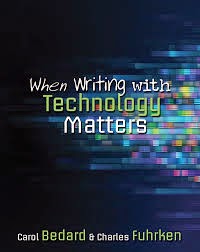
I'm continuing my summer book study of When Writing with Technology Matters by Carol Bedard and Charles Fuhrken, and I was blown away by Part 1 of this book.


Part 1 describes a project of reading and writing to launch moviemaking. It is a great example of incorporating authentic reading and writing tasks in the classroom, and it is definitely the type of project that is enhanced through technology integration. I've broken down the contents of this section into 10 steps for you to use in your own classroom projects.

Step 1: Choose books for reading groups

This project functionally starts with literature circles. Students are offered 4-6 book titles to choose from that reflect a variety of genres and themes. Bedard and Fuhrken point out a few considerations that are particularly insightful:
- Fantasy promotes more creativity in the movie making
- Realistic fiction will be more relatable
- Historical fiction facilitates research skills
- Protagonists should be similar in age to students
- Open-ended texts can be adapted into sequels while interesting main characters support prequels 

Action step:
(  ) Create a WebQuest that includes author websites and book review sites about each of the candidate books. This will allow students to make a good decision about which book is the best fit. 

Step 2: Set up Student Blogs for facilitating book discussions

Blogs allow students to engage in deeper discussions about their books and practice writing about texts. As a teacher, you can facilitate this by offering open-ended questions to guide student responses. Later, as students become more comfortable with the platform, you can model appropriate blogging behavior by leaving comments on students’ posts. Eventually, as students become more versed with the logistics of blogging, you can take more of a hands-off approach with limited interventions so the students can discuss the books independently.

Action step: 
(  ) Choose a blogging platform to use with students. One I recommend is KidBlog, which I’ve written about in the past. 

Step 3: Adapt the book into a screenplay.

Once students have finished reading the book, they should consider ways to adapt the book into a screenplay. In order to make sure the writing engages the students creatively, they should modify the story in some way. This would be an example of the types of creative reading often associated with fan-fiction. A downloadable poster of possibilities is below.


At this stage, students are working independently on their writing, taking the stories down different avenues according to their interests. It’s not necessary to complete the writing cycle at this stage—they merely need a workable rough draft.

Action step:
(   )  Give students time to write their story ideas for a screenplay. At this stage, it can remain a narrative and doesn’t need to be formatted into a script.

Step 4: Develop the pitch.

Screenwriters pitch their story ideas to studios all the time, making this an authentic part of the moviemaking process. Rather than simply reading their screenplay to the class, the authors describe 3 key components of a good pitch: 
* It grabs the audience’s attention through a hook or a teaser.
* It summarizes the story and identifies the genre without giving away everything.
* It’s delivered with high energy and excitement.  
A complete mini-lesson on giving a pitch is featured in the appendices of the book. 

Once students have developed and practiced their pitches, they’ll want to deliver them to their classmates to determine which movies will be made. You could have the class vote on a pitch for each book that was read, or you could invite an impartial panel to come in and watch the pitches.

Action steps:
(   ) Teach students how to develop and deliver a pitch.
(   ) Determine which story idea(s) will advance into the movie-making process. The number of winning pitches determines the number of movies your students will be making so consider what you can manage.

Step 5: Collaboratively revise the story from the winning pitch

Students can work together in their book club small groups to help revise the story from the winning pitch for their text. As they discuss, they may find that details from the other students’ stories could enhance the winning story in some way. The revised story becomes the property of the group, and it will benefit from opportunities for conferring just as any other writing would.

Action step:
(   ) Consider using outsiders for conferences to give a new sounding board to the young writers as they develop their ideas for their audience.

Step 6: Storyboarding

Students essentially take their stories and turn them into comic strips. This forces them to think about scenes, key events, and dialogue. Interestingly, the authors advise against using technology for this stage because the students can get too caught up in playing around with features, perfecting their storyboards, etc. 

Here’s a great Prezi I found for introducing and explaining the purpose of storyboards:

Action step:
(   ) Create story board templates for students and support them as they develop their complete storyboards.

Step 7: Write the script

Scriptwriting is a great way to teach students how to show, not tell, how characters are feeling because they can’t rely on a narrator to describe feelings - actions and dialogue have to do the heavy lifting. Such a process will help students revise and tighten even more as they modify their stories to meet the conventions of an actual screenplay.

Here is a workbook that I previously downloaded for free from the Young Writers Program Script Frenzy website, but it seems that Script Frenzy has since died, and they no longer offer this resource on their website (only stuff for NaNoWriMo).


Action step: 
(  ) Consider downloading scriptwriting software (e.g., www.scripped.com) to ease the process.

Step 8: Learn about the jobs in a movie-making process

Students will need to decide on roles such as actors, set designers, directors, and camera operators. The authors offer some mini-lessons for this in the appendix, and they recommend having the students apply for jobs. Given the size of some groups, it will likely be necessary for students to assume multiple roles or participate as actors in multiple films. 

Action step:
(   ) Use your blogging platform to have students apply for jobs. They should explain what skills they possess that make them best suited for that particular role.

Step 9: Film the Movies

Much like a Hollywood movie, students should be given a timeline for completing the filming process. They’ll need to plan locations, props, costuming, and any other special effects that need to be considered prior to the day of filming. They’ll also want to rehearse their lines and block scenes to enable the filming process to run smoothly. Given a tight schedule and limited resources for their no-budget films, they’ll realize the importance of collaborating to make the process work. 

Action step: 
(   ) Develop a timeline for filming. Communicate expectations for filming days so that students can plan in advance.

Step 10: Edit the Final Films

The authors discuss Windows Movie-Maker, but you could also use iMovie for this process. At this stage, students will work together to piece their scenes together and add special effects like slow motion, music, voice overs, green screen backgrounds, closing credits, etc. Some groups may also opt to include bloopers and outtakes in their final versions. This will be the culminating product of their weeks of hard work.

Action steps:
(   ) Determine the editing software students will use to edit their final films.
(   ) Plan a film festival/viewing party to create a deadline for project completion. Consider inviting parents and/or other classes to diversify the audience.

I really enjoyed reading this chapter, and I’m definitely looking forward to trying a project like this in my own classroom. If you haven’t already picked up a copy of the book When Writing with Technology Matters, I highly recommend it. They have student examples, handouts, and mini-lessons that enhance these steps even more. 


What are some good books that you use in your classroom reading groups that you can envision as a screenplay? I’d love to hear your suggestions in the comments!

I'm heading to ISTE here in Atlanta for the next few days, but I'll be back next week with lots of ideas from all that I'll learn at the conference! Be sure to follow me on Twitter and Instagram @eberopolis if you want a sneak peek of all that I'm seeing and learning!

Tuesday, June 3, 2014

10 Reasons to Write with Technology

I'm super excited about the two books that I'm studying this summer as part of my summer series.


Today, I'm diving into the first one entitled When Writing with Technology Matters by Carol Bedard and Charles Fuhrken. 


Rather than giving you a laundry list of all of the ways that you could integrate technology into writing, this book goes in-depth into two specific projects. The first project uses reading and writing to launch moviemaking, and the second project is authoring a visual nonfiction essay. As someone who routinely integrates technology in the classroom, I like this book because it examines lots of angles of these types of projects in great detail. But this book is also good for beginners for that same reason. Rather than offering an overwhelming number of ideas, it breaks down projects into manageable and authentic steps. 

I'll be examining each of those projects in future posts, but today I want to talk about the first chapter - 10 Reasons Why Writing with Technology Matters.

The opening chapter is filled with research about how technology integration contributes to student learning. They break it down into a list of the following 10 items:

Something that I would add to this list that captures many of the items is the notion of "authenticity." When you engage students in project-based learning such as making a movie or designing a visual essay, students feel like they have a real purpose. Their work will be viewed by others, and this really motivates students to push a little bit harder. Giving students the freedom, space, and resources to work on something meaningful is a powerful recipe for empowering learners.

I also want to comment on teacher-disposition. A lot of people who visit my classroom think that I have all the answers for technology integration, but let me tell you a secret -- I don't. Almost every day, a student or teacher will ask me a question about how to do something, and I won't immediately know the answer.

And that's okay.

Because one of the most important things I can model for my students is the act of troubleshooting and problem solving. If I can't figure out how to do something, I'll hop on the internet and poke around until I can find the answer. I think a lot of teachers avoid technology because they're not confident in their ability to work with it, but you can find a whole lot of information just-in-time as you need it online. Don't let a lack of confidence divert you from trying some of these projects.

Next week, we'll dive into Part 1: Reading and Writing to Launch Moviemaking. If you haven't already picked up a copy of this book, I'd highly recommend it. And it's not too late to join in the book study! In fact, you're only 14 pages behind! :)

If you are reading this book, I'd love to know what you think. Leave me a note in the comment section!

Happy reading (and writing)!


This post contains affiliate links, but I only recommend products or services I use personally and believe will add value to my readers. I am disclosing this in accordance with the Federal Trade Commission's 16 CRF, Part 255: "Guides Concerning the Use of Endorsements and Testimonials in Advertising."

Friday, October 11, 2013

Are You Ready for NaNoWriMo?

I plan to encourage my students to participate in NaNoWriMo again this year. For those of you who aren't familiar, November is National Novel Writing Month, or NaNoWriMo for short. It's the month where tell your inner-editor to hush so you can just let the ideas flow on to the page. It's about getting something done without worrying how perfect it is, because you can always go back and revise in December.


Last year, as October drew to a close, I introduced NaNoWriMo to my class. I explained the premise, and gave them the option of taking on the challenge. We talked about word count goals and commitment to writing outside of the classroom. Then the fun started. Student after student signed up, each cheering each other on as they dedicated themselves to writing a book. In the end, I think all but two students decided to participate. We had weekly lunch meetings where students could eat and share their writing with friends, and although not all students met their goals, they definitely started to find their voices as authors.

The Young Writers Program for NaNoWriMo has some great teaching materials to get your students psyched for NaNoWriMo and to teach them about narrative writing in general. You can check out their website at http://ywp.nanowrimo.org/. In addition, there's still time to order a NaNoWriMo classroom kit which comes with a student goal setting poster, NaNoWriMo stickers to track progress toward a goal, and buttons for those students who participate or finish. The classroom kit is free (and awesome), but they request a $10 donation for the materials -- a small price to pay to get your students excited about writing.

In honor of NaNoWriMo, I'll be hosting a month-long link-up that will start on November 1 and run the duration of NaNoWriMo. Whether your class officially participates in NaNoWriMo or not, I hope you'll join me in sharing the great writing work that's happening in your class. Grab the button, spread the word, and meet me back here on November 1st for a writing extravaganza!


In the meantime, check out the Educators' section of the Young Writers Project. I'm sure you'll find plenty to get you (and your students) excited for a month full of creative writing!

Who's in?

Thursday, October 10, 2013

The Best Text for Teaching How to Write and Revise Leads

My fourth graders hate revision. They're often offended by the mere suggestion that they hadn't nailed the perfect lead to their stories in their first draft.

I'm used to this. I see it every year in writer's workshop, especially at the beginning of the year when we're writing in a genre for the first time.

And every time I see this, I become more determined to break them of this thinking.

Today, we were working on the Common Core State Standard W.4.3a - Orient the reader by establishing a situation and introducing a narrator and/or characters; organize an event sequence that unfolds naturally.

My favorite story to use for this is standard -- especially with fourth graders -- is The Teacher's Funeral by Richard Peck.


This book, set in a small Indiana town with a one-room schoolhouse, has the best opening line of a children's book ever.

If your teacher has to die, August isn't a bad time of year for it. 

Richard Peck keeps it going from there, building an incredible introduction. You can read the entire first chapter here.

Today, I started our writing lesson by reading this chapter to them. I have the Kindle edition of the book, so when I read it, I can project it on our ActivBoard so the students can follow along as I read. They laughed throughout the intro and were immediately hooked, begging me to choose this as our next chapter book read-aloud. Score one for the objective of "hooking your readers!"

I then asked them how many of them thought that introduction was the one that was in the first draft of his book.

One or two hands went up.

Richard Peck shared in an article called "In the Beginning" (Horn Book Magazine, September 2006, pp. 505-508) that it normally takes him 24 drafts of his lead before he's happy with it. TWENTY-FOUR!

And here I'm asking my students to take a second pass at their writing.

I shared that little nugget with my students before we reread the first chapter. As we read if for a second time, we focused on the characteristics of his writing that made it such a great lead.

Here's what my students noticed, compiled into an anchor chart:


Once we finished the chart, I had them go back to a piece of writing they've been working on and try to write a different introduction. Some students tried changing the point of view, others jumped into the action or started with dialogue. Whatever the strategy, all of them managed to produce a new version of their introduction, and all were at least a little better than what they'd started with.

We'll get this revising thing down eventually...

What are some of your favorite books to use to teach students how to hook their readers? I'd love to hear about them in the comments!

Saturday, September 28, 2013

Authors Are People, Too!

Oh, bloggy friends, I have missed you! This year is kicking my behind! I had high hopes that I'd still be blogging with great regularity this year, but alas...between my 28 awesome fourth graders, the start of my PhD, and my incredible two-year-old daughter, time is an oh-so-precious commodity. By the time my little one makes it to bed at night, I. am. wiped. out. And then I usually have textbooks to read and papers to write. But not today.

Today, I wanted to share with you the very awesome author visit we had at my school.

Granted, it's old news by now. It happened during the Decatur Book Festival on Labor Day weekend, which, by the way, is one of the coolest things you can do in the Atlanta area if you're ever here for Labor Day. But my experience was cool enough that I still wanted to share...four weeks later...

Every year as part of the book festival, 1 or 2 children's authors come and talk at our school. This year, the fourth graders got to listen to Chris Grabenstein. If you're not familiar with him, you should seriously run, not walk, but run to get his new book, Escape from Mr. Lemoncello's Library.


This book is the story of Kyle Keeley, an avid game-player who wins a contest to spend the night in the new library built by master game-maker Luigi Lemoncello. As Kyle explores the library, however, he realizes that winning the contest was just the beginning, and a whole new game with high stakes, twists, and turns is starting. It reminds me a little of Willy Wonka and the Chocolate Factory, and Roald Dahl is just one of many authors referenced in the book. It's very clever, fast-paced, and entertaining. I started it as a read-aloud when we found out that Mr. Grabenstein was coming, and we seriously couldn't put it down. It was one of those books where I've had multiple students go out and buy it on their own because they couldn't handle waiting for us to read it in class. It's way up there on my recommendation list.

Mr. Grabenstein definitely inspired the students as writers. He shared a lot about his writing process, but his overall message was to just let it flow without editing yourself. To illustrate that, he modeled writing a story for the students. Prior to starting, he gathered 5-6 random words that students had written on sticky notes. He stuck those in his back pocket. Then, he projected a crazy picture.

He explained the difference between a protagonist and an antagonist, and he encouraged students to "Ask yourself, 'what if...?'" He said that there are always a few questions you need to think about when planning a story.
  • Who is this guy?
  • What does he want?
  • Where is he?
  • Who wants to stop him?
  • Why?
He then took student suggestions to answer those questions and plan his story.

Next, he had students come up with a starting sentence: "My face hurts," and an ending sentence: "He ate radioactive iridium isotopes" so we would know when his story was starting and ending. And then he just started telling the story. It was hilarious! At various points throughout the story, he would pretend to be stuck and pull a word out of his back pocket, and no matter what it was, he just rolled with it. He has a background in improv comedy, so I suspect that helps. Still, it really hit home the message that you shouldn't censor yourself while you're drafting -- you can always go back and change things later if you need to. When you're drafting, you should just let it flow to wherever creative place you're led. 

 We were pretty inspired by his presentation, and we went back to the classroom to a) write, and b) read more of his book. The kids were so excited! We were totally unprepared, however, when he came into our classroom about an hour later. (So unprepared, in fact, that some of my students were still working on their vocabulary tests on Spelling City!) 


Usually when authors have come to our school, they've given their presentations, signed a few books, and then split. Mr. Grabenstein went above and beyond, happy to spend his day engaging with the kids and taking an interest in what they were doing. They barraged him with questions, and he answered openly and honestly, encouraging the kids the whole time. Needless to say, Mr. Grabenstein has secured quite a fan base in Eberopolis.


In the weeks since his visit, we've had countless conversations in writing about some of the little tidbits Mr. Grabenstein shared with us, but more than anything, I loved that my students got a chance to see that authors are real people, too. They have good ideas and bad, writer's block and inner editors just like the rest of us. But they power through those hurdles, and we get some fantastic books as a result.

Thank you for visiting us, Mr. Grabenstein. It was definitely a highlight in our year.

Wednesday, June 5, 2013

Pinterest Professional Learning

I love Pinterest. I love professional learning. Put them together, and I'm as happy as can be! That's why I was thrilled to see that Jivey's Workshop Wednesday is all about favorite pins (and she used my Assess Yourself posters as an example)!


So without further adieu, I'd like to share some of my favorite pins!

Back to School Organizing


I'm planning to replace my table-top caddies this year because they've really taken a beating. One thing that's contributed to that is that they've been really disorganized, so kids dig through them looking for supplies. Even though they have cups in the caddy to hold supplies, the kids don't remember where to put their materials in the caddie, and it becomes a huge mess. Having labels on the outside could eliminate the guess work (and the excuses) so they can stay organized. I'll probably do something super cutesy with them, though, because Pinterest inspires that.

Teaching Writing


Before becoming a teacher, I coached a college debate team, and I was a high school and college debater before that. People often think that means that I like to argue, but that's not the case at all -- I hate arguing with people. I'm really anti-confrontation. But if I'm in an argument, you better believe that I'm going to have examples and evidence to back up what I'm saying, and chances are, I'll also know what I'm going to say to respond to your counterarguments. My husband, who has a similar debate background, often jokes that even though he was a great debater himself, he knows he'll lose any argument that I initiate with him because I'll go into battle ready. Fortunately, we hardly ever argue.

Understanding how to use evidence and reasoning and how to respond to counterarguments are important skills for advocacy, and I think they're some of the most valuable skills we can teach to students. So as the Common Core moves away from persuasive writing toward argumentative writing, I think it's really important that we emphasize the differences. I love these exemplars for demonstrating what argumentative writing looks like. And in my mind, well-written argumentative essays are far more persuasive than one-sided appeals on a topic.

Off my soap box now. 

Teaching Science


While I'm going to be almost completely paperless in my classroom next year, I still intend to use science notebooks (albeit electronic ones). I like this anchor chart for showing students some of the important characteristics of science writing.

If you haven't linked up with Ideas By Jivey's Pinterest Professional Learning, be sure to do so. And of course, I'd love for you to follow me on Pinterest as well. The vast majority of my pins are teaching-related (and the rest tend to be recipes and home organizing stuff...nothing too crazy).


Happy Pinning!

Tuesday, June 4, 2013

The Secret Knowledge of Fourth Graders

As I was reminded in reading all of the June Currently's, not everyone is on summer vacation yet. So for those of you who are not yet enjoying time off, I wanted to share a fun creative writing activity that works well for the end of the year.

One of my favorite books to share with students is The Secret Knowledge of Grown-Ups by David Wisniewski.


In this highly-entertaining book, Wisniewski takes several "rules" that children often hear -- like "eat your vegetables" -- and explains the real reason that rule exists. For example, we don't eat our vegetables because they make us healthy. The real reason we eat them is to stop them from rising up and taking over the world! Or, we don't brush our hair to help us look neat, we do it to stop the hair from growing back into our heads and crowding out our brains. The book is filled with hilarious examples and colorful illustrations that my students loved.

I read excerpts from this book over the course of a couple days, and several of my students looked at it in their free-time. We then set out to write our own examples for a class book entitled "The Secret Knowledge of Fourth Graders."

Here are some of the "rules" students wrote about:
  • Why you need to read "Just Right Books"
  • Why we use number 2 pencils on tests
  • Why you can only check out 2 books from the library at a time
  • Why we take AR tests
  • Why it's important not to be tardy
  • Why we return library books on time
  • Why we have homework
  • Why we use pencils instead of pens
  • Why we don't bend the pages of a book
  • Why we stack chairs at the end of the day
  • Why we take standardized tests
The creativity in the "real" reasons why we do these things was fantastic. Here's an example from one of my students:


We wrote our final drafts on our iPads in Pages using the Visual Report template. That helped tremendously with the formatting.

I'm planning to share several of these examples with my students next year, and I will definitely do this activity again. My students enjoyed it so much that several of them were talking about making other "spin-off" books such as The Secret Knowledge of Minecraft Players or The Secret Knowledge of Readers. I'm sorry that I didn't get to see how those turned out as well.

If you've never read The Secret Knowledge of Grown-Ups, I highly recommend it. It's great for sparking creative writing ideas, and it can provide a fun writing activity in the late stages of the year.

What are some other school rules you can envision your students writing about? I'd love to hear your ideas in the comments!

Tuesday, December 4, 2012

NaNoWriMo Results

A few weeks ago, I shared that my class was participating in NaNoWriMo (a.k.a. National Novel Writing Month). I had sent away for the free NaNoWriMo resources, and they sent me a set of 30 participant buttons, a poster, and some progress tracking stickers. (See the buttons and stickers in the blurry picture below...It didn't look that blurry on my iPhone...)

 
I pitched the program on Halloween and told students that anyone who wanted to participate could do so. We planned to meet at lunch on Thursdays to share our writing, but the majority of the NaNoWriMo work would be happening outside of class. I shared my previous experiences with the program, but stressed that participation was purely voluntary. Much to my surprise, 22 out of my 25 students signed up and set great writing goals for themselves (2,000 - 5,500 words).

We started with a great deal of enthusiasm. Almost all of my class came to our first lunch meeting and worked on writing the entire time -- including some of my reluctant writers! I also had several parents asking what I had done with their children because so many of them were coming home and writing for hours after school. Seriously.

Each Thursday, we updated our poster with our word counts. We added a letter spelling N-A-N-O-W-R-I-M-O for every 10% of our goal that we reached. Students who made 100% of their goal put a star sticker at the end. Here's how our poster looked early in the month.

See how I'm listed there at the end of the list with a 15,000 word count goal? Ha! Didn't quite make it by the end of November, but the students said that I get to attend the final celebration anyway since I'm hosting it. :)

I told students that they could finish writing this weekend since NaNoWriMo didn't officially end until midnight on Friday. I had about half of the students make their goal, and many more decided that even though they had too much going on in November to make their goal, they had great story ideas to continue with in the future. Based on that, I'd call this NaNoWriMo experience an overwhelming success.

Did you participate in NaNoWriMo this year or are you doing other activities to encourage your students to write outside of school? If so, I'd love to hear about it in the comments!

Have a great week!

Sunday, November 25, 2012

Ordering Adjectives and Other Obscurities

This is the first year that we are implementing Common Core at my school, and one of the first surprises to me was the specificity of the list of language standards. Take this one for example:

4L1d. Order adjectives within sentences according to conventional patterns (e.g., a small red bag rather than a red small bag).

Okay, fair enough. I know that we don't say red small bag, but I couldn't articulate why. And if I couldn't articulate that, it seemed like I would have a hard time teaching it. Hence began one of many research projects for this year.

As it turns out, there are actual rules for ordering adjectives! Whenever you have a list of adjectives, according to most sources, they should be put in the following order:

  • Number - e.g., many, few, seventeen
  • Opinion - e.g., beautiful, silly, annoying
  • Size - e.g., big, small, gargantuan
  • Age - e.g., old, young
  • Shape - this one is tricky! It can be shape like "round" or shape like a condition - e.g., dusty
  • Color - e.g., red, blue, yellow
  • Origin - think countries, directions, religions, e.g., Canadian, northern, Catholic
  • Material - e.g., plastic, wooden
  • Purpose - e.g., sleeping as in a sleeping bag
The wheels started turning with this new knowledge, and slowly the lesson plans came together for this topic.

For the first day, I made a PowerPoint about the order of adjectives and my students made a foldable to record their thinking. 


On day two, we looked at some examples that I pulled from the books they were reading in their book clubs, and I gave them the task at looking for more sentences that used multiple adjectives together. They recorded their sentences, and we shared some of the examples as a class.

Days 3 and 4 involved some word sorts. I made some cards with adjectives on them, and they sorted them by what type of adjective they were. Then they put some together to make sentences. 


On Friday (day 5), we took a short assessment that had students identify the correct order of adjectives in some multiple choice questions, and then write their own sentences.

Overall, I was happy with how the unit turned out, and we all learned a lot about adjectives that we hadn't known before. By getting the students to play with adjectives more, I also noticed them using more interesting word choices in their writing. Win-win.

I've put together all of the resources that I used (and then some) into a unit over at Teachers Pay Teachers. It's one of many units I've been working on to deal with some of the more obscure standards introduced by Common Core, and I hope you'll check it out.


It will be on sale Monday and Tuesday for 28% off with the TpT Cyber Monday sale if you use the code CMT12. 


What are some of the more interesting/challenging standards you've encountered with the Common Core? I'd love to hear about it in the comments section!


Saturday, October 27, 2012

Weekend Reading - October 27, 2012

Here are some of my favorite teacher blog posts that I read this week:
While I wish I had some grandiose and fun plans for this beautiful fall weekend, I will be sitting home at my desk grading papers, writing report cards, and preparing for next term's units. We have 6 six-week terms, and therefore six grading periods throughout the year. Most of the time, we have a week long break between each term (which I LOVE...), but this term, we don't have a break until Thanksgiving. We did all of our end of term assessments last week, and I now have until Halloween to grade them all and write report cards for my 25 darlings, as well as prepare for entirely new units in all of the subject areas. To say that I'm a little overwhelmed by the prospect would be an understatement. 

How do grading periods and report cards work where you're at? How much time do you typically have between the end of the term and the completion of report cards? I'd love to hear about it in the comments section!

Wednesday, October 24, 2012

NaNoWriMo

Did you know that November is National Novel Writing Month (a.k.a. NaNoWriMo)? During this month, crazed writers all over the world band together and commit to moving their stories from their noggins to the page. It's 30 days of saying sayonara to your inner editor and focusing on quantity over quality. The goal is to just finish that first draft, and let the editing happen in December. For those who are inhibited by their inner critics, it can be a fun and liberating experience to meet daily word count goals and just be creative with the writing. There are tons of online communities to support the experience, and many writing groups meet face-to-face to cheer each other on. I've participated in NaNoWriMo twice, and while I lack any published novels to show for it, it was a fantastic experience that really helped me grow as a fiction writer.

What does this have to do with teaching? Well, let me tell you. Every year, the Office of Letters and Light -- the lovely group that came up with NaNoWriMo -- sponsors a Young Writers Program to encourage kids to write. They've developed a whole curriculum to help students plan their novels, set writing goals, and overcome writer's block. They'll send out inspirational emails from published authors throughout the month of November (and these are authors your kids will have heard of. I seem to remember getting emails from Jerry Spinelli last year) to keep the kids chugging through their novels. They also have a free kit that you can order with goal tracking posters and cool pins for the kids who participate. You can access all of that information through the Young Writers Program website.


In the past, I have been blown away by what my kids have accomplished during NaNoWriMo -- not so much in terms of the quality of their writing as much as their confidence and enthusiasm as writers. I've had many kids walk away from the process thinking they could be "real authors" when they grow up because of all of the writing they were able to accomplish in such a short amount of time. Parents have been overwhelmingly supportive of it as well. I'm super excited to try it again this year because I think I have many students on the verge of finding their love for writing, and this may be just the right thing to make it happen.

I'll be sharing weekly updates here throughout November, but I wanted to get the information out about NaNoWriMo in case anyone else wants to get in on the fun. There's still time to sign up and prepare before November starts, so you can kick off NaNoWriMo with everyone else in the country on November 1st.

Have you ever participated in NaNoWriMo or are you interested in participating this year? I'd love to hear your thoughts or questions in the comments section!

Happy writing!

Saturday, September 29, 2012

Writing in Math

One of the reasons I opted to be an elementary teacher instead of a middle school or high school teacher is because I love teaching and learning about everything. I couldn't commit to just one subject. My passions change from one year to the next, and this year, I'm very passionate about teaching math.

This is the first year we're working with the Common Core in my district, and it has been a fun challenge to get to know all the new standards. It has been a big transition for my students, however. Many of them seem to be used to finding answers and being done with problems -- not persevering through challenges, representing their thinking in multiple ways, or explaining their thinking. As a result, the first 6 weeks were tough for some of my students.

I saw this quote in my math endorsement class this week, and it really struck me as exactly what my students needed to hear. We've been doing a lot of work on problem solving lately, and some of my darlings are all too willing to give up if they don't immediately know the answer to a problem. We had a great class discussion about what this quote means, and how it applies to the work we've doing.

We've also been talking about the Standards for Mathematical Practice lately, and connecting those to our process work in class -- especially when we write about math. The SMP's are pretty abstract for fourth graders, so I tried breaking them down into questions for students. For example, when we deal with the first standard to "Make sense of problems and persevere in solving them," we use these prompts:

Breaking it down into questions makes it a lot easier for students to know what they need to do to apply that standard to their work, and it has really facilitated our conversations. I've made posters for each of the eight Standards for Mathematical Practice, and I often see students refer to them when they're working on their problem solving and explanations.

Another thing that I've done to help with the SMP's is share student work in class discussion. On Thursday, we worked on a complicated story problem involving multiple factors of a number. Students had to solve the problem and write their explanation on a sheet of white paper. I covered up the names of the students, and displayed 5 or 6 with a document camera. Students read the explanations and were asked to name one thing the mathematician did well and one thing that could be done better. I was really impressed by the suggestions that students were giving! They were commenting about the efficacy of different number models, the organization and labeling of work, the thoroughness of the approach, and the need to have both numbers and words in a good explanation. It was some powerful feedback, and I'm excited to see where we'll go with this next. I can tell my students' confidence with math is increasing, and I really think they're becoming much more competent in their writing about math. Next week, I'll be giving them more writing prompts in math to include in their math journals, so we'll have to see how that goes.

To get your own freebie copy of the math quote poster, click here.  My Standards for Mathematical Practice Posters are available in my TpT store, or by clicking on the image below. They're on sale this weekend for $2.25.


Are you teaching Common Core math in your classroom? What challenges, if any, have you been facing this year? I'd love to hear about it in the comment section!

Have a great weekend!

Tuesday, September 11, 2012

Bananas about Scientific Writing

One of the things that's really exciting to me about Common Core this year is how well it integrates with content teaching for Science and Social Studies. Now that I'm a working mom, I really appreciate anything that allows me to hit multiple subjects and standards at once, and last term, I found myself pushing a lot of informational writing into science.

During our first week of school, I was covering science process standards before launching into our first unit on ecosystems. One of the first activities that we did involved writing about bananas.

In the few days prior to this lesson, we spent some time looking at and talking about science notebooks and the importance of recording our thinking. We took a look at some examples of real science notebooks kept by actual scientists (Note: as I write this blog, the sciencenotebooks.org website appears to be down. I really hope this is a temporary thing because it was a tremendous resource!). For this day's lesson, I asked my students to get out their inquiry notebooks, and I gave each student a banana. They were instructed not to eat their banana, but instead, they were to observe and describe their banana in their notebook.


During this first wave of writing (3-5 minutes), students gave very similar descriptions such as "long, yellow, brown spot," etc. 

We shared descriptions at our tables, and then I asked the class how many students felt like they could identify their banana based on their description if I collected all the bananas from the tables and mixed them up. Only a couple of hands went up. We then talked about what kinds of information and details would be helpful to do that and started a list.


What really came out of this discussion was the idea that we needed to focus on unique characteristics. Everyone had a general idea what a banana looks like, but details such as having a brown spot in the shape of a heart approximately 2 inches from the end of the banana sure went a long way in helping us identify the banana in comparison to "long and yellow with brown spots."

I then gave them time to revise their descriptions. Some students traced their banana in their notebooks and then added details and markings from their banana.

Other students asked to get out tape measures to be even more precise in their details and descriptions.

At the end of this revising time, I had students mix up their bananas between two tables and trade notebooks with another student to see if the other person could identify the correct banana based on the description. It was a great check to see if the details were descriptive enough so that others beyond the writer would understand them. If the correct banana wasn't identified, the students made suggestions for additional details that could be helpful.

What I loved about this activity was how it really got us thinking about interesting details. It's the kind of anchor lesson that we can refer to in all types of writing when we talk about spicing up our writing and good word choices. The bananas were inexpensive, and of course, we ate them at the end of the lesson. 

Do you use science or inquiry notebooks in your classroom? What are some strategies you use to help your students write in science? I'd love to hear your thoughts in the comments section!

Related Posts Plugin for WordPress, Blogger...