Showing posts with label book study. Show all posts

Friday, June 27, 2014

From Literature Circle to Student-Created Movie in 10 Steps

I'm continuing my summer book study of When Writing with Technology Matters by Carol Bedard and Charles Fuhrken, and I was blown away by Part 1 of this book.
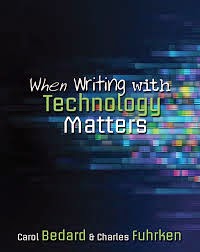


Part 1 describes a project of reading and writing to launch moviemaking. It is a great example of incorporating authentic reading and writing tasks in the classroom, and it is definitely the type of project that is enhanced through technology integration. I've broken down the contents of this section into 10 steps for you to use in your own classroom projects.

Step 1: Choose books for reading groups

This project functionally starts with literature circles. Students are offered 4-6 book titles to choose from that reflect a variety of genres and themes. Bedard and Fuhrken point out a few considerations that are particularly insightful:
- Fantasy promotes more creativity in the movie making
- Realistic fiction will be more relatable
- Historical fiction facilitates research skills
- Protagonists should be similar in age to students
- Open-ended texts can be adapted into sequels while interesting main characters support prequels 

Action step:
(  ) Create a WebQuest that includes author websites and book review sites about each of the candidate books. This will allow students to make a good decision about which book is the best fit. 

Step 2: Set up Student Blogs for facilitating book discussions

Blogs allow students to engage in deeper discussions about their books and practice writing about texts. As a teacher, you can facilitate this by offering open-ended questions to guide student responses. Later, as students become more comfortable with the platform, you can model appropriate blogging behavior by leaving comments on students’ posts. Eventually, as students become more versed with the logistics of blogging, you can take more of a hands-off approach with limited interventions so the students can discuss the books independently.

Action step: 
(  ) Choose a blogging platform to use with students. One I recommend is KidBlog, which I’ve written about in the past. 

Step 3: Adapt the book into a screenplay.

Once students have finished reading the book, they should consider ways to adapt the book into a screenplay. In order to make sure the writing engages the students creatively, they should modify the story in some way. This would be an example of the types of creative reading often associated with fan-fiction. A downloadable poster of possibilities is below.


At this stage, students are working independently on their writing, taking the stories down different avenues according to their interests. It’s not necessary to complete the writing cycle at this stage—they merely need a workable rough draft.

Action step:
(   )  Give students time to write their story ideas for a screenplay. At this stage, it can remain a narrative and doesn’t need to be formatted into a script.

Step 4: Develop the pitch.

Screenwriters pitch their story ideas to studios all the time, making this an authentic part of the moviemaking process. Rather than simply reading their screenplay to the class, the authors describe 3 key components of a good pitch: 
* It grabs the audience’s attention through a hook or a teaser.
* It summarizes the story and identifies the genre without giving away everything.
* It’s delivered with high energy and excitement.  
A complete mini-lesson on giving a pitch is featured in the appendices of the book. 

Once students have developed and practiced their pitches, they’ll want to deliver them to their classmates to determine which movies will be made. You could have the class vote on a pitch for each book that was read, or you could invite an impartial panel to come in and watch the pitches.

Action steps:
(   ) Teach students how to develop and deliver a pitch.
(   ) Determine which story idea(s) will advance into the movie-making process. The number of winning pitches determines the number of movies your students will be making so consider what you can manage.

Step 5: Collaboratively revise the story from the winning pitch

Students can work together in their book club small groups to help revise the story from the winning pitch for their text. As they discuss, they may find that details from the other students’ stories could enhance the winning story in some way. The revised story becomes the property of the group, and it will benefit from opportunities for conferring just as any other writing would.

Action step:
(   ) Consider using outsiders for conferences to give a new sounding board to the young writers as they develop their ideas for their audience.

Step 6: Storyboarding

Students essentially take their stories and turn them into comic strips. This forces them to think about scenes, key events, and dialogue. Interestingly, the authors advise against using technology for this stage because the students can get too caught up in playing around with features, perfecting their storyboards, etc. 

Here’s a great Prezi I found for introducing and explaining the purpose of storyboards:

Action step:
(   ) Create story board templates for students and support them as they develop their complete storyboards.

Step 7: Write the script

Scriptwriting is a great way to teach students how to show, not tell, how characters are feeling because they can’t rely on a narrator to describe feelings - actions and dialogue have to do the heavy lifting. Such a process will help students revise and tighten even more as they modify their stories to meet the conventions of an actual screenplay.

Here is a workbook that I previously downloaded for free from the Young Writers Program Script Frenzy website, but it seems that Script Frenzy has since died, and they no longer offer this resource on their website (only stuff for NaNoWriMo).


Action step: 
(  ) Consider downloading scriptwriting software (e.g., www.scripped.com) to ease the process.

Step 8: Learn about the jobs in a movie-making process

Students will need to decide on roles such as actors, set designers, directors, and camera operators. The authors offer some mini-lessons for this in the appendix, and they recommend having the students apply for jobs. Given the size of some groups, it will likely be necessary for students to assume multiple roles or participate as actors in multiple films. 

Action step:
(   ) Use your blogging platform to have students apply for jobs. They should explain what skills they possess that make them best suited for that particular role.

Step 9: Film the Movies

Much like a Hollywood movie, students should be given a timeline for completing the filming process. They’ll need to plan locations, props, costuming, and any other special effects that need to be considered prior to the day of filming. They’ll also want to rehearse their lines and block scenes to enable the filming process to run smoothly. Given a tight schedule and limited resources for their no-budget films, they’ll realize the importance of collaborating to make the process work. 

Action step: 
(   ) Develop a timeline for filming. Communicate expectations for filming days so that students can plan in advance.

Step 10: Edit the Final Films

The authors discuss Windows Movie-Maker, but you could also use iMovie for this process. At this stage, students will work together to piece their scenes together and add special effects like slow motion, music, voice overs, green screen backgrounds, closing credits, etc. Some groups may also opt to include bloopers and outtakes in their final versions. This will be the culminating product of their weeks of hard work.

Action steps:
(   ) Determine the editing software students will use to edit their final films.
(   ) Plan a film festival/viewing party to create a deadline for project completion. Consider inviting parents and/or other classes to diversify the audience.

I really enjoyed reading this chapter, and I’m definitely looking forward to trying a project like this in my own classroom. If you haven’t already picked up a copy of the book When Writing with Technology Matters, I highly recommend it. They have student examples, handouts, and mini-lessons that enhance these steps even more. 


What are some good books that you use in your classroom reading groups that you can envision as a screenplay? I’d love to hear your suggestions in the comments!

I'm heading to ISTE here in Atlanta for the next few days, but I'll be back next week with lots of ideas from all that I'll learn at the conference! Be sure to follow me on Twitter and Instagram @eberopolis if you want a sneak peek of all that I'm seeing and learning!

Friday, June 20, 2014

Reading in the Wild - Chapter 1

I absolutely loved Donalyn Miller's book The Book Whisperer: Awakening the Inner Reader in Every Child, so I was very excited to see that she released a new book - Reading in the Wild: The Book Whisperer's Keys to Cultivating Lifelong Reading Habits AND that Catherine over at The Brown Bag Teacher has organized a summer book study of it.


Chapter 1 - Wild Readers Dedicate Time to Read

Already, this book has lots of ideas that I can integrate into my classroom. In fact, I suspect that I will re-read each chapter just to make sure I'm recording all of the ideas so I remember them in August. (And I may go back and re-read The Book Whisperer, too!) But one thing that I really want to emphasize this year is building a community of readers. I like the idea of students sharing the books they're reading and making recommendations to each other. Personally, I use GoodReads to track that information for myself (I've blogged about that before here). I've also had my students blog about their reading (see here). But what I'd really like is something more like GoodReads - a social networking site - but appropriate for fourth graders. 

I recently stumbled across the site Reading Rewards through a Twitter Chat, and this might be the answer I'm looking for. 


This site allows you to set up your class into a reading community where they can create libraries of the books they've read, write book reviews, get and make recommendations, and make a wishlist of books they want to read. There is also a reading log component and a reward system that allows you and parents to create rewards based on achieving individualized reading goals. I haven't had a chance to try this out with students yet, but based on my exploration of the site, it looks very promising.

Do you have any experience with the Reading Rewards website? Have you come across any other sites you'd recommend for building a community of readers? I'd love to hear about it in the comments.

Tuesday, June 3, 2014

10 Reasons to Write with Technology

I'm super excited about the two books that I'm studying this summer as part of my summer series.


Today, I'm diving into the first one entitled When Writing with Technology Matters by Carol Bedard and Charles Fuhrken. 


Rather than giving you a laundry list of all of the ways that you could integrate technology into writing, this book goes in-depth into two specific projects. The first project uses reading and writing to launch moviemaking, and the second project is authoring a visual nonfiction essay. As someone who routinely integrates technology in the classroom, I like this book because it examines lots of angles of these types of projects in great detail. But this book is also good for beginners for that same reason. Rather than offering an overwhelming number of ideas, it breaks down projects into manageable and authentic steps. 

I'll be examining each of those projects in future posts, but today I want to talk about the first chapter - 10 Reasons Why Writing with Technology Matters.

The opening chapter is filled with research about how technology integration contributes to student learning. They break it down into a list of the following 10 items:

Something that I would add to this list that captures many of the items is the notion of "authenticity." When you engage students in project-based learning such as making a movie or designing a visual essay, students feel like they have a real purpose. Their work will be viewed by others, and this really motivates students to push a little bit harder. Giving students the freedom, space, and resources to work on something meaningful is a powerful recipe for empowering learners.

I also want to comment on teacher-disposition. A lot of people who visit my classroom think that I have all the answers for technology integration, but let me tell you a secret -- I don't. Almost every day, a student or teacher will ask me a question about how to do something, and I won't immediately know the answer.

And that's okay.

Because one of the most important things I can model for my students is the act of troubleshooting and problem solving. If I can't figure out how to do something, I'll hop on the internet and poke around until I can find the answer. I think a lot of teachers avoid technology because they're not confident in their ability to work with it, but you can find a whole lot of information just-in-time as you need it online. Don't let a lack of confidence divert you from trying some of these projects.

Next week, we'll dive into Part 1: Reading and Writing to Launch Moviemaking. If you haven't already picked up a copy of this book, I'd highly recommend it. And it's not too late to join in the book study! In fact, you're only 14 pages behind! :)

If you are reading this book, I'd love to know what you think. Leave me a note in the comment section!

Happy reading (and writing)!


This post contains affiliate links, but I only recommend products or services I use personally and believe will add value to my readers. I am disclosing this in accordance with the Federal Trade Commission's 16 CRF, Part 255: "Guides Concerning the Use of Endorsements and Testimonials in Advertising."

Monday, June 2, 2014

June Currently


Summer vacation is here! Woohoo! Technically, I'm not quite done. I have to finish packing up my classroom, and I still have a few things to finish for mailing out report cards, but the hard part -- managing 27 excited fourth graders before summer break -- is over. I'm on my own schedule now.

And still waking up at 5:30am sans alarm clock every morning... sigh...


Listening - I just sent my final report cards and test scores to the printer. Now I just have to stuff them into envelopes, but oh -- it's good to be done!

Loving - I was supposed to be taking two classes this summer, but the first one (a prerequisite for the second) was cancelled due to low enrollment. I took that as a sign (excuse?) that I'm supposed to take a break this summer, and I'm loving that. I have a huge "to do" list of things I want to accomplish, and it's a huge stress relief to know that I won't have to write any papers or travel to classes throughout the week.

Thinking - Many of my favorite people at work are moving on to new adventures next year, so it will be a very different place when I return at the end of July. I'm going to miss them a ton! Since I'm also moving classrooms, I'll have a very different environment with new neighbors. I like fresh starts and new opportunities, but I'm still sad to say goodbye to my current friends and neighbors who I'll hardly get to see next year. At least there's Facebook to keep in touch!

Wanting - My parents live in Michigan, and I haven't seen them since Christmas. The long distance thing didn't bother me so much before I had my daughter, but now I really want them around more and more. They're coming to visit next week and staying for 10 days. If I had my way, they'd move to Atlanta permanently. I'm so excited that they're visiting!

Needing - My newest obsession is the FX show "The Americans." If you haven't seen it, you really should. It's set in the 1980s, and it's about two KGB agents who are posing as Americans to spy for the Soviet Union. It's a really good drama with very interesting characters, and my husband and I have jammed through all of season 1 and most of season 2. Of course, because my eyes automatically close at 10pm, I fell asleep through an episode last night, and I have to catch up today so we can finish the season together tonight. Summer vacation can be so rough!

Summer Bucket List - I have lots of goals for the summer, but no "must do" tasks. So here are my three:
1. Read fiction - I'm terrible with this throughout the year, especially now that I'm back in grad school, too. I'd really love to read a couple books each week just for the fun of it. I miss doing that!
2. Finish projects - this is broad and includes a lot of areas -- school projects, home projects, knitting projects, organizing projects, etc. I love starting projects, but I'm not always the best at finishing them in a timely manner. I'd like to wrap up a few of those this summer so I'm starting fresh in the fall.
3. Relax! Juggling full-time teaching and part-time PhD work was really intense. I don't think I appreciated how hard I'd been working until the semester ended, and I realized how much more free time I had. Since everything starts up again in the fall, I'd like to just relax and take it easy this summer. No pressure to tackle everything on my possible to do list or anything like that. Less school work and more manicures, I say! That sounds like a great summer plan to me.

Of course, while the summer will be full of relaxation, I'm also planning to blog a lot more. I've had a big pile of posts banked up for a while now, and since I finally have my own schedule, I'll be back here pretty regularly. I hope that you'll stick around and leave me comments! I'm also going to be starting my summer book clubs tomorrow, so stay tuned for the first post about When Writing with Technology Matters!


Thursday, July 25, 2013

Word Nerds Book Study - Chapter 7

By the time you read this, I will be officially back to work.

Yes, you read that correctly. My preplanning started today, and I will have students in my classroom on August 1st.

I've been super-busy preparing my classroom and wrapping up summer projects (and lamenting the number of projects that I never even got started). I'm looking forward to sharing more about that in the next couple of weeks. Today, however, I'm excited to participate in the book study of Word Nerds. This book study is being hosted by Sabra at Teaching with a Touch of Twang, and I would definitely encourage you to check out the previous posts at her blog and link up. This is a fantastic book for improving vocabulary instruction.


Chapter 7 - Spreading Vocabulary Wings

This chapter is all about additional classroom activities that can enhance students' vocabulary understandings. The authors make a few key recommendations.

1. Extend Vocabulary Through Morphology
Encouraging students to analyze affixes and roots can build their confidence as they tackle more multisyllabic words. Start with the most common prefixes (un-, re-, dis-, etc.) and build from there. Once students have experienced a few weeks of studying Greek and Latin roots, they can participate in a "Crystal Ball Word" activity in which they look closely at a word's morphology to predict its meaning. For example, with the word "transportation," students can break it up into "trans-," "port," and "-ation" and think of all the words that use the same prefix, root, or suffix. They discuss word connections as they make lists of related words, and from this one word, the students in the book were able to think of 41 words that share a similar morpheme! These sorts of word attack strategies are valuable to students as they tackle new vocabulary on their own.

2. Connect Background Knowledge and Facilitate Comprehension
Drawing on the comprehension strategies of making connections, this section highlights how important it is for students to be able to have a variety of experiences with words when they're trying to make sense of a complex text. For example, as students are attempting to make inferences from the text, they should be explicitly coached to add vocabulary words to make connections based on clues from the text and the student's background knowledge. This gives students an opportunity to practice using the new vocabulary and adds additional layers of meaning to the words they're learning. This could be an especially useful practice if you're trying to connect literature with content vocabulary. The example in the book highlights how some relevant social studies vocabulary (immigrant, culture, destination, etc) could be applied and connected to the book Grandfather's Journey by Allen Say.


3. Extend Vocabulary Development with Children's Literature
Picture books, with their shorter texts, less complicated plots, and amazing artwork, can be tremendous resources for teaching reading strategies. The authors highlight why this is also true for vocabulary instruction, and they highlighted several vocabulary-rich children's books that could be used. Here are a few of my favorites:


Pirate Pete's Talk Like a Pirate by Kim Kennedy tells the tale of a pirate who is looking to build a crew. But while Pirate Pete talks in "aargh's" and plank-walking language, the rascals he's recruiting talk in very sophisticated sentences with eloquent vocabularies. This may be used as a metaphor for how we want to elevate our students' writing and speaking away from "pirate-talk" and into the more elevated words of the rascals. Students practice revising sentences from pirate sentences into rascal sentences, and after several days of study, students can have a "Pirate Party" where they compete to "Talk Like a Rascal."


13 Words by Lemony Snicket takes 13 seemingly unrelated words and interweaves them into an amusing story. This could be a template for a student writing assignment which would require students to select 13 unrelated content vocabulary words and tie them into a story in the style of Lemony Snicket. I'm looking forward to trying this activity with my own students.


Baloney (Henry P.) by Jon Scieszka and Lane Smith tells the tale of a boy in space who is late for school and needs to come up with an excuse for his teacher. As he describes his adventures, he inserts a bunch of words that sound like nonsense words (szkola, zimulis, etc.), but they're actually words from different languages. This is a great book for introducing strategies for teaching context clues.


Max's Words by Kate Banks is a great story for building word consciousness among students. It tells the tale of a boy who begins collecting words cut out of magazines and newspapers. He eventually realizes he can rearrange the words into stories, and he becomes the envy of his siblings.


The Odious Ogre by Norton Juster tells the tale of an ogre who has an extensive vocabulary that he uses as he terrorizes the town. Given the number of multisyllabic words incorporated in the text, it could be easily incorporated into studies of Greek and Latin roots and morphemes.

Word Nerds has so many great suggestions for easy ways to incorporate vocabulary instruction. These books were just a few of the ones mentioned, so I would recommend reading this chapter for some additional ideas. And be sure to visit Teaching with a Touch of Twang for additional suggestions and insights in this fabulous book.

Back to pre-planning! Thanks for visiting!


Disclosure of Material Connection: Some of the links in the post above are "affiliate links." This means if you click on the link and purchase the item, I will receive an affiliate commission. Regardless, I only recommend products or services I use personally and/or believe will add value to my readers. I am disclosing this in accordance with the Federal Trade Commission's 16 CFR, Part 255: "Guides Concerning the Use of Endorsements and Testimonials in Advertising."

Tuesday, June 11, 2013

Number Talks Book Study - Chapter 2

The farther I get into the book Number Talks, the more excited I am about implementing them next year. This is such a great resource, and I'm only on Chapter 2!

I'm linking up with Misty at Think, Wonder, & Teach for her fabulous book study. If you haven't checked it out yet, be sure to visit her because she's already offering some great resources to support the book (whereas mine are still works in progress!).


This chapter walks through some of the nuts and bolts of setting up number talks, and it describes how to manage some of the procedures and expectations. One of the sections that really resonated with me in this chapter was about building accountability with the students. So often, there are a few students who are eager to share their mathematical thinking, and there are many others who are willing to sit back and let those students shine. I don't like pulling sticks with students' names for something like this, but I also don't want students to feel like they don't need to participate. This book offered some great strategies for dealing with that:

1. Once all of the strategies have been shared, number them and have students show with fingers which one they found to be the most efficient strategy. This will get them thinking about the math involved.

2. Keep records of the problems posed and strategies used, and label them with the students' names. I plan to use my iPad to track this. I've talked before about setting up student data notebooks on Evernote, and I think that would be the perfect platform to track student participation. I can photograph students' work and add anecdotal records about what I observe. It would also be easy to share with parents at parent-teacher conferences.

3. Hold small group number talks throughout the week. As I prepare to transition into more of a math workshop/guided math approach, this seems like a very viable option.

4. Create and post anchor charts of the different strategies that students are using. The book names a variety of strategies, or you could develop names with your students. Having the charts available to reference could scaffold the less confident students.

5. Use exit cards. The authors recommend giving each student a notecard. On one side, students should record their solution, and on the other side, they should record a strategy that another student shared that they liked.

6. Give a weekly computation assessment of 5-10 problems. The selected problems should reinforce the concepts and strategies introduced throughout the week. I can also imagine using an app like Show Me or Explain Everything to assess. These are whiteboard apps that allow students to record audio on top of their drawing. Students could record their solutions and narrate them as if they're presenting them to the class. This would be another important artifact that could be saved in the student's Evernote portfolio to share with parents or an RTI committee. If it's only one problem, most students would be able to complete the task on the app in 5-10 minutes as the video they'd be creating should be less than a minute long.

I think these accountability measures could be effective in getting students to participate more. Of course, the classroom environment will matter, too, and I look forward to setting those factors in place for my Number Talks this fall.

In other news, I'm excited to share that I'll be participating in Sabra's book study of Word Nerds at Teaching with a Touch of Twang. Word Nerds explores strategies for teaching vocabulary to students, and it's another fantastic resource. It's published by Stenhouse, and you can preview the entire book online or you can purchase the book in Paperbook or Kindle edition.


The book study starts on Thursday and runs throughout the summer. You can see the full schedule by clicking on the image above. I'll be hosting Chapter 7, and I can't wait!

Also, have you joined in the Teacher Toolbox Trio Linky Celebration yet?

You still have time to link up and be eligible to win a $25 Teachers Pay Teachers gift certificate! The linky celebration will close on Friday night, so be sure to join the fun. My wish list has definitely grown as I've seen all of the fabulous resources other teachers are sharing and recommending.


Sunday, June 2, 2013

Number Talks Chapter 1 - Thumbs Up for the Silent Thumb

I'm linking up with my friend Misty over at Think, Wonder, & Teach for her summer book study of Number Talks: Helping Children Build Mental Math and Computation Strategies, Grades K-5

Given that I'm wrapping up a K-5 Math Endorsement this month, this is a timely book for me. I love to teach math far more than I ever anticipated that I would when I entered this profession, and I really enjoy getting students to share and discuss their mathematical thinking. I've noticed, however, that many students lack strong mental math and computation strategies, relying instead on memorization to get them by. By the time they get to 4th grade, that's not really a viable strategy anymore. They're starting to work with much larger numbers, and they subsequently have more parts and steps to keep straight in their heads. If they don't have great mental math strategies going, then it's likely to become a mess pretty quickly. They can always solve problems on paper, but unless they have the good number sense that goes with doing mental math, they'll never be able to gauge the reasonableness of their answers. In those regards, this book seems like a great idea.

Chapter 1 really just introduces the concept of a number talk, and Misty does a great job summarizing it, so I won't go into that here. One of my favorite teaching ideas from the book so far, however, was the idea of the "Silent Thumb." When students are given a mental math problem, they need some "think time." But every class has 2-3 students who are super math-letes who have the answer before the rest of the class has even processed what problem they're being asked to solve, and those kids with their proud "I know! I've got it!" hand-waving typically end up dominating the conversation. The "silent thumb" solves that problem. All students hold their hand in a fist over their chest as they solve the problem. When they've got an answer, they move their hand from a fist to a "thumbs up." They then think of another strategy to solve it while the other students are thinking, and for each additional strategy they come up with, they extend a finger. Awesome, right? I love how this gives all students some think time without creating pressure for some kids to hurry up because the fist is held close to the body -- not waved in the air for everyone else to see. It also validates those super math-letes for their mathematical thinking by allowing them to communicate to the teacher that they have multiple strategies for solving the problem. And if they don't have multiple strategies, then they have something to think about while the others are working.

I'm definitely interested in learning more about Number Talks, and I'm excited to delve into this book a bit more. I'll be posting more about this book in the weeks to come as I link up with Misty's book study.

If you don't currently have a copy of Number Talks, you can still read the first chapter online. The book is a little bit pricier than most professional development books, but it comes with a DVD full of examples and it has a lot of resources packed in the text. If you're looking to increase students' mental math abilities, then this could be a great resource to use.

Be sure to check out Misty's Number Talks chapter 1 linky party where you can add some ideas of your own or read what other teacher bloggers are saying about the book. I promise you'll find some great ideas there!

And click here to see my review of Chapter 2!


Have you ever done Number Talks in your classroom? I'd love to hear about your experiences in the comments section!

Thanks for reading,
Related Posts Plugin for WordPress, Blogger...